
What ALEA Highway Patrol Does
Highway enforcement in Alabama runs through one agency. That agency is the Alabama Law Enforcement Agency, or ALEA. Twelve state agencies and functions merged into it under Act 2013-67. That history breeds confusion. An older reference to a separate state police force may point nowhere today. Highway Patrol does that work now, inside ALEA's Department of Public Safety.
Road safety drives the mission. ALEA describes coverage of about 69,500 miles of rural roadway. Highway Patrol supplies roughly 65 percent of its arresting officers, by the agency's account. A traffic stop can end in an arrest. So can an impaired-driving stop. Warrant service and other roadside investigations also produce arrests. Booking then happens at a local jail, since the state agency does not hold people itself.
The official Highway Patrol overview explains the division's role and organization. It identifies seven troops and 17 posts. A Motor Carrier Safety Unit and a Communications Unit round out the structure. None of it is a jail roster. Troops and posts organize patrol work across the state. Booking and custody records stay with the facility that receives the person. The same ALEA Highway Patrol division page gives the current service description. It names the division and its rural-road mission. That context helps when a trooper made the arrest. Anyone sorting out where an ALEA arrest is documented can open ALEA's Highway Patrol page for the division's own summary.
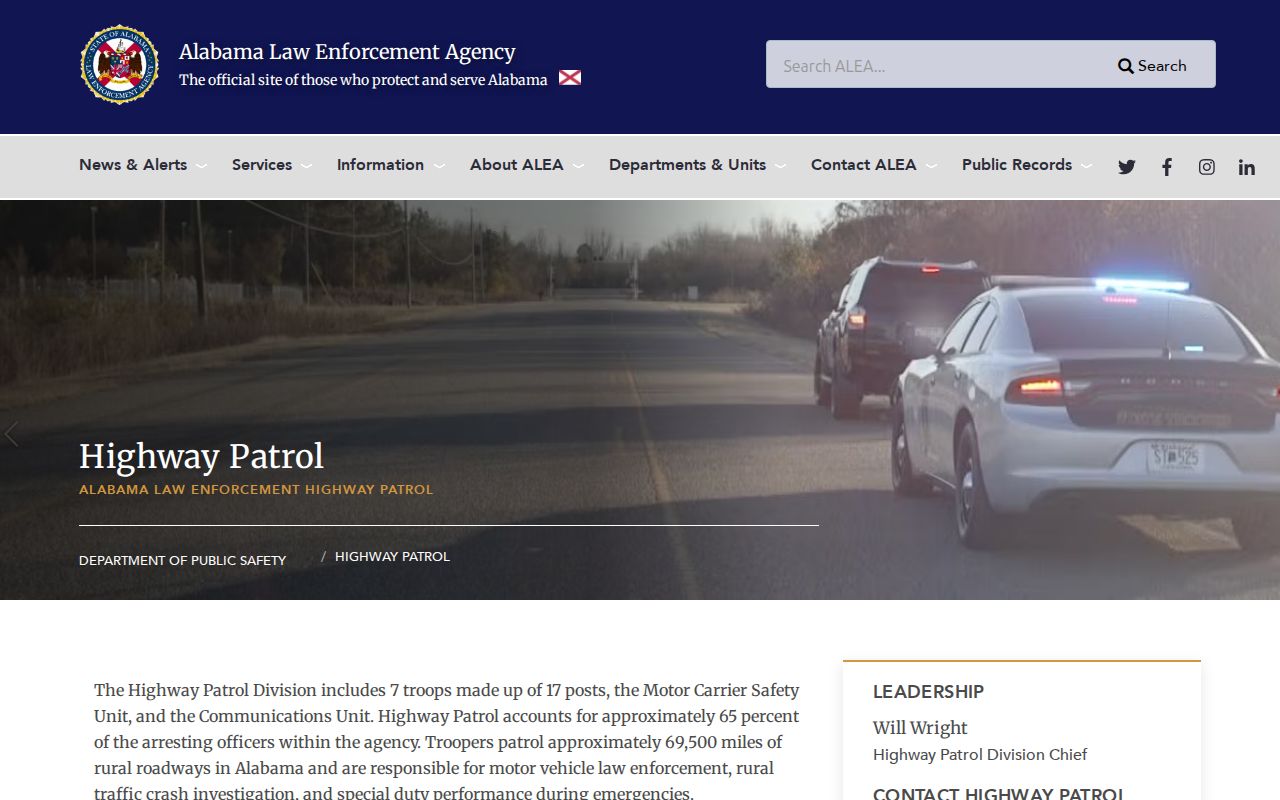
The page is an agency overview, not an arrest lookup. For a person-specific booking, go to the official source kept by the receiving county or city jail.
Where ALEA Arrest News Appears
The ALEA newsroom is the agency's main outlet for enforcement news. Releases there cover holiday traffic and boating campaigns. DUI results and crash summaries appear too. It is not a live booking feed. A release may tally enforcement across several days, or recount one major incident after investigators gathered facts, so it will not name every person arrested.
One dated example is the 2025 Labor Day enforcement summary. It mixes DUI arrests with crashes, citations, warnings, injuries, and fatalities. That is a campaign result, not a booking list. The Fourth of July release reads the same way. It reports fewer holiday traffic fatalities statewide. Treat both as broad public-safety reporting with a stated date range, not a daily count of people arrested.
The newsroom headline cards change as ALEA posts new material. A page viewed today may not match next week. Start with the releases at ALEA's newsroom and work from there.
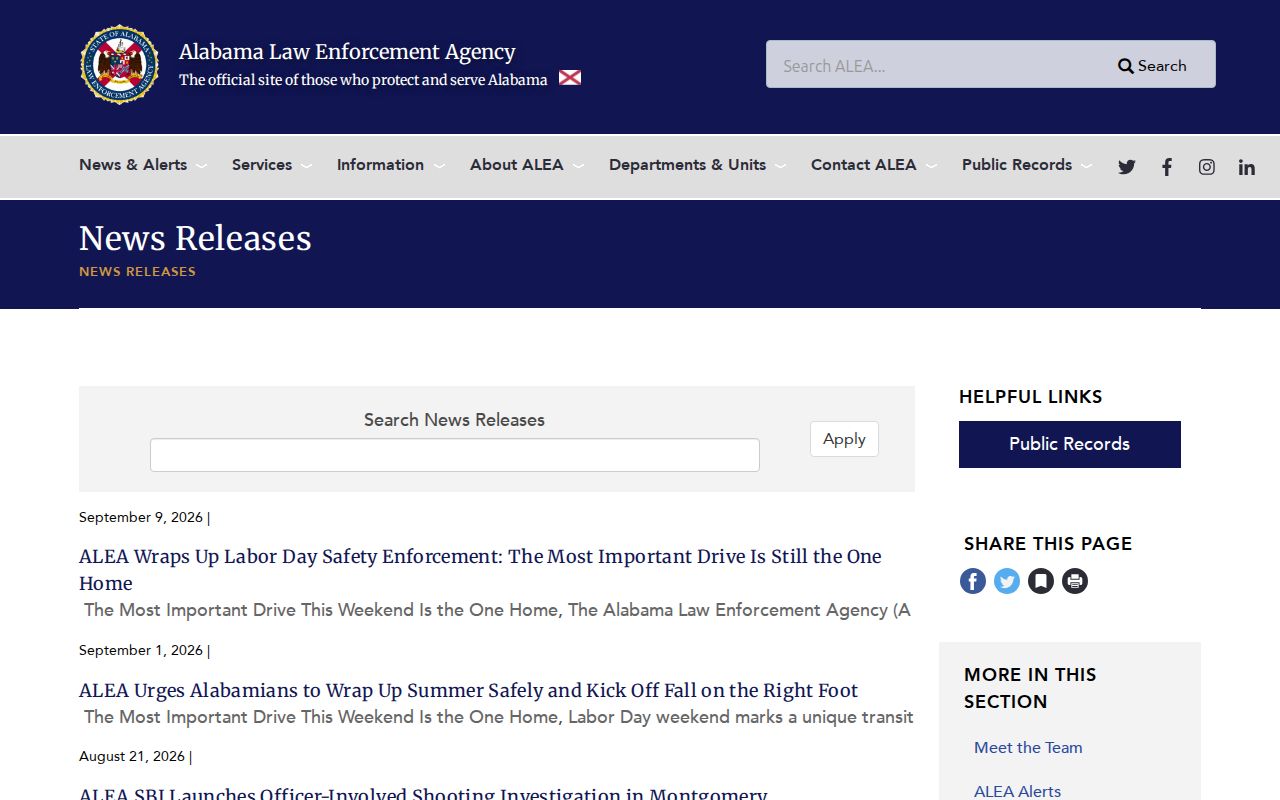
Check the date, location, and named agency first. A statewide campaign recap does not prove that a particular person was arrested or remains in custody.
| Official channel | What it can show | How to use it |
|---|---|---|
| ALEA News | Selected incidents, enforcement campaigns, agency announcements, and aggregate results | Confirm the release date and whether it names an individual or reports totals |
| Highway Patrol division and post pages | Agency role, troop/post structure, and contact routes | Use for jurisdiction and routing; do not assume a roster is attached |
| Receiving county or municipal jail | Possible booking entry, charge label, bond detail, custody status, or booking photo | Check the actual jail's current official roster; each county controls its own display |
| Written public-record request | A responsive report or other releasable agency record | Describe the event and record narrowly, then ask about cost, timing, and limits |
How to Find an ALEA Arrest
Start with the question you need answered. Check whether ALEA announced an enforcement action. Search its newsroom by date, town, road, or campaign name. A booking entry is different. To find one, learn where the arrest happened and which jail received the person. A patrol release and a jail roster are separate records kept for separate purposes.
- Search the agency's published news. Check the ALEA newsroom for a release that matches the town, event date, road, or enforcement operation. Read the full release so you know whether it concerns one arrest, multiple arrests, or only statewide totals.
- Route to the booking county. The county of arrest is a useful starting point, but transport and venue can affect the receiving facility. Use the Alabama County Directory to open the correct county's records guide and official sheriff/jail links. If a city jail or another authorized facility received the person, follow that agency's official source.
- Check the correct time window. The statewide Daily Arrest Report guide compares same-day county views and explains why a short-window search can miss a booking. The Weekly Arrest Log guide covers multi-day rosters and blotters. Neither page is a statewide database.
- Request the record if no public entry answers the question. Send a specific request to ALEA or the responsible local custodian, with the date, location, person, incident number if known, and exact record type. Ask for an estimate before work begins and for the basis of any withholding.
A blank result is not the end. Widen the spelling and date choices and search again. Then ask the receiving agency directly whether it maintains the record. The system may not cover that agency, the entry may not be posted, or privacy and investigation limits may apply.
Where ALEA Arrestees Are Booked
ALEA arrests people but runs no jails. A trooper's arrest usually ends at a local jail. The warrant, venue, charge, and local arrangements decide which facility receives the person, whether a county jail, a municipal jail, or another authorized holding facility. Booking happens there. The booking sheet, roster entry, and any public booking photo stay with the receiving agency. Not every arrest appears in a county web roster. An online entry can be delayed, limited, or removed under local policy.
Booking route: find the county or city that took the person in. Then check custody with that jail. ALEA's news page does not track who is in custody, and arrestees can be moved after booking.
Start with the County Directory. Follow the receiving county's own sheriff or detention link from there. No county name? Use the known stop location as a lead. Then call the public number the agency posts. Never lean on an old news release to decide where someone sits today. Bond, release, transfer, and court dates all matter. Any of them can change the picture after that first roster snapshot.
A longer record trail has later stages. Once sentenced, a person may move into state custody. The Alabama Department of Corrections then keeps a separate offender information system. That search does not replace a county jail roster for a fresh arrest. Federal custody runs through its own locator. Each step answers a different question about the same record.
How to Request an ALEA Arrest Report
ALEA publishes no single Highway Patrol arrest-report form with a fixed fee and turnaround. An arrest report is also not a crash report. Alabama's public-record process is the way forward. Send a narrow written request to the agency or the troop and post responsible. Alabama Code §36-12-40 governs inspection and copying of public writings, with exceptions. Expect possible redactions. Investigative or sensitive details may be withheld. What you get depends on the record and the circumstances.
- Identify the event. Give the date or a close range, town or road, county, person's name if known, and incident or case number. Note the troop or post if the source identifies one.
- Name the record. Ask for a specific item, such as the arrest report, incident report, citation, dispatch record, or a particular page of a file. Avoid asking broadly for every document about a person when a narrower record will answer the question.
- Send it to the responsible office. Use ALEA's current public contact or records route, and identify whether the request concerns Highway Patrol or another ALEA division. A separate local arrest should go to the local arresting agency or jail.
- Ask about cost, timing, and limits. Request an estimate before extensive work, ask when the request is acknowledged, and ask which legal ground supports any denial or redaction. Keep the submission and the response.
The statewide rules set a rhythm. A standard request should draw acknowledgment within 10 business days. A substantive response is then due within 15 business days after that acknowledgment. A time-intensive request takes a different path. You get a cost estimate and a longer window if you elect to proceed. None of this promises full release or an instant copy. The agency may need extra time or withhold material under an exception.
Crashes are different. ALEA keeps a separate, specific route for crash records. Its agency page describes online or license-office access. It also covers the statutory crash-report process. Know the form. Just do not borrow its price or payment steps as an arrest-report fee.
ALEA Crash Reports Are Not Arrest Reports
ALEA's driver and crash-record page lays out a defined way to order a traffic crash report. It cites §32-10-7. It describes a $15 request path. Payment and delivery options for that $15 request vary by how you ask. The form wants crash-identifying details and includes mailing instructions. All of that belongs to crash paperwork. None of it sets a statewide $15 price for a Highway Patrol arrest report.
The crash-report section appears on that page in its full context. The distinction matters. A person seeking a trooper's arrest narrative should name that record and ask the responsible office directly. ALEA explains its separate crash report process here.
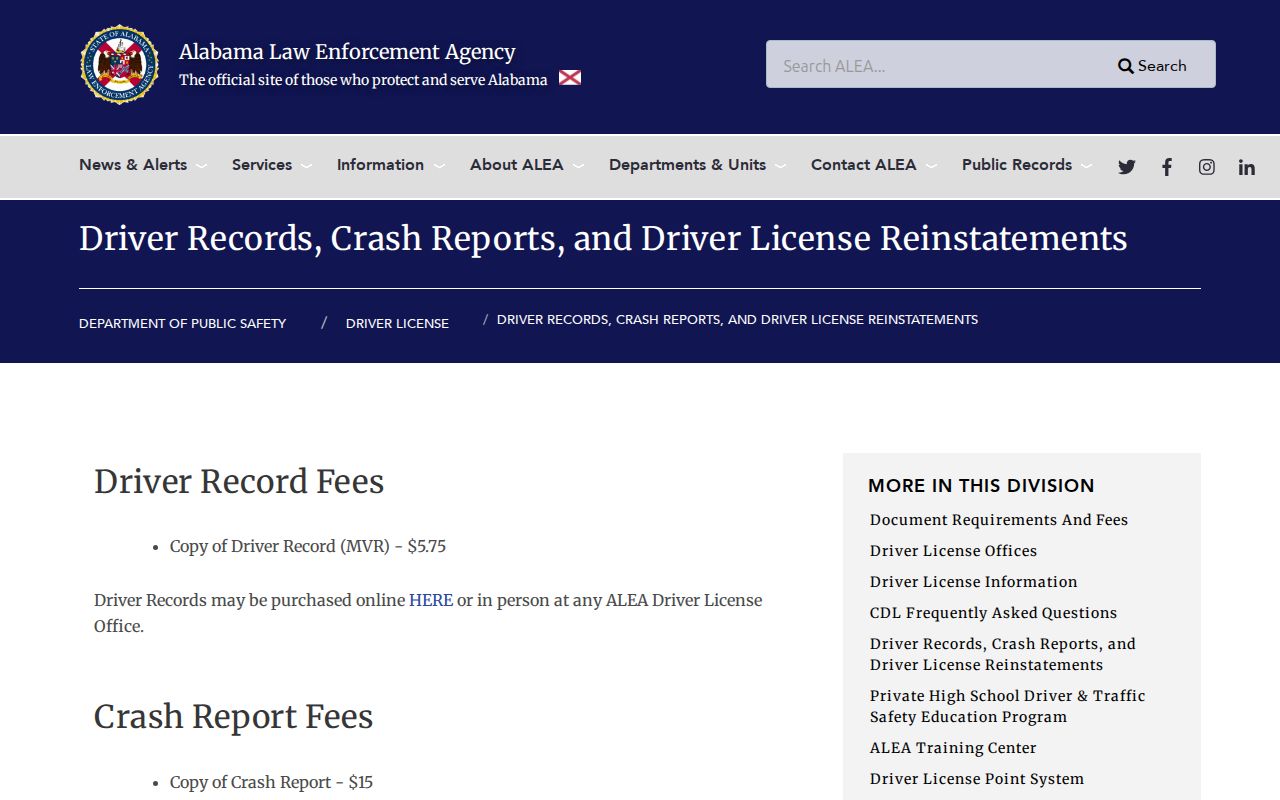
Confirm the form matches the record you need before paying anything. A crash report covers a collision and its investigation. An arrest or incident report follows a different request path, with its own disclosure limits.
Request Highway Patrol Video
Want a trooper's audio or video? ALEA provides a specific Request to View AV Recording form. It covers recordings made by an ALEA trooper or the State Bureau of Investigation. The usual process means viewing the relevant portion in Montgomery, not receiving a copy. Reasonable redaction or editing fees may apply. An active investigation can limit what is shown. This path is separate from arrest-report or crash-report requests.
The form points to VideoRequest@alea.gov. Give enough detail to pin down the stop or event: date, location, trooper or incident number if known, and the recording type. Check the current form before sending personal information or making a trip. A form's existence does not guarantee a recording exists or can be released in full.
Another agency may have created or hold the recording. If ALEA says so, ask which office is the custodian. File a separate request there. Municipal cameras, jail cameras, body cameras, dash cameras, and dispatch audio can each have different owners and retention rules. One request rarely reaches every system.
Contact ALEA About an Arrest
The official Highway Patrol contact page lists the division's contact options plus 17 operational posts. Post assignments and directory details change. Verify phone numbers there. The page gives a statewide Highway Patrol number, 334-676-6003, and highway.patrol@alea.gov. Those channels can route a question. Any record request should still name the event and the record clearly. ALEA's Highway Patrol contact and post page shows the current panel.
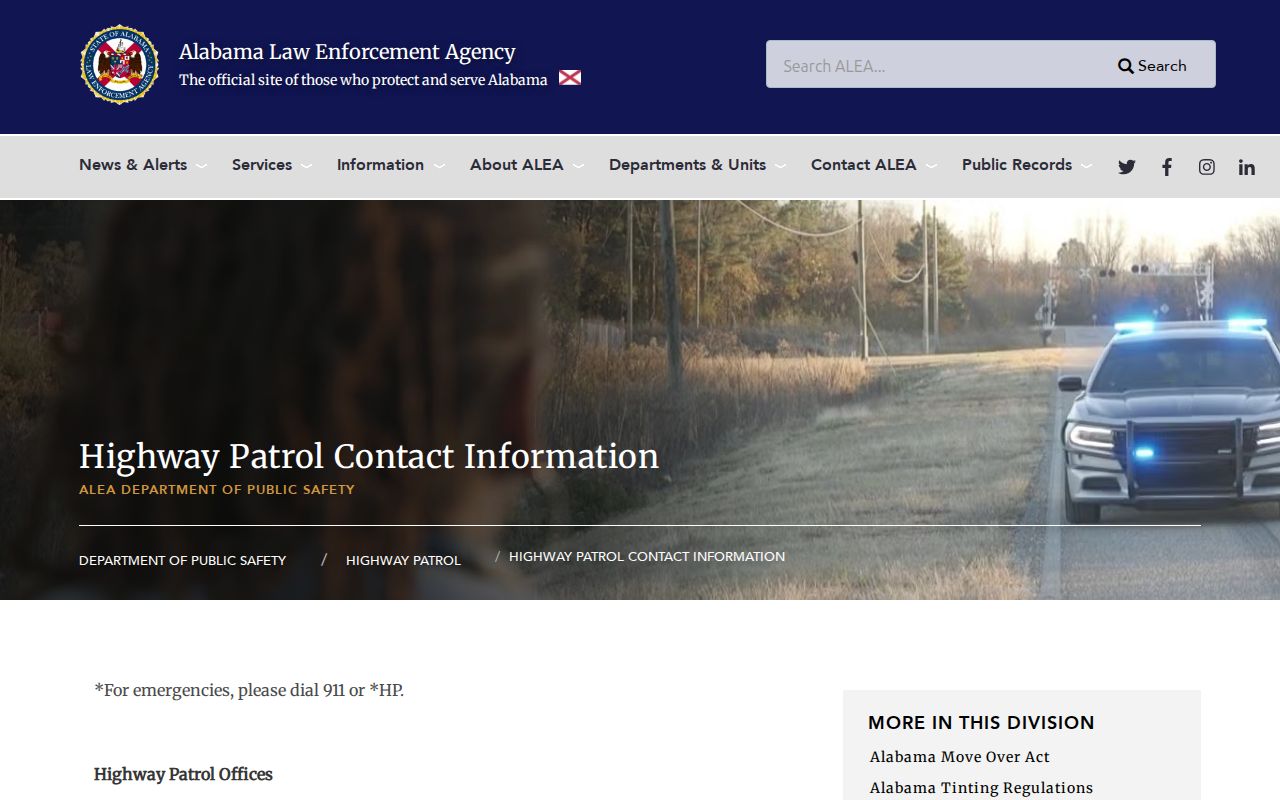
Use the contact page first. Confirm the right route before you send a long request. If someone is in custody, call the jail that took them in. County booking entries belong on that county's directory route. ALEA can explain its own report process, but it cannot confirm another agency's roster.
Court records move past the arrest itself. A case file may later show a new charge, a hearing date, a dismissal, a plea, or a sentence. Alabama's Just One Look service sells access to case information one case at a time, where available. A docket is not an arrest record, though. Restricted juvenile, youthful-offender, sealed, or expunged material stays out of public search results.