
Alabama Public Arrest Records
Are arrest records public in Alabama? In most cases, yes. But each office plays by its own rules. State law gives residents the right to inspect and copy public writings, within statutory limits. That right covers many record types. A county booking record, a police incident report, a court file, and a prison-custody profile are not the same thing. One can sit online while another stays restricted.
A public roster is a convenience, not a full file. A sheriff may post the booking date and charge but hold back an active-investigation detail or protected personal data. A court docket shows the case outcome. The jail's booking photo may never appear there. So identify the record you need. Ask the office that keeps it. If access is refused, the office should state why. The Alabama public-writings statute sets the general rule, and agency procedures plus exceptions decide the rest of any real request.
Alabama Open Records Requests
Alabama Code §36-12-40 governs public writings held by government offices. It does not promise free copies or instant posting. The custodian sets a reasonable way to inspect or copy. Redactions are allowed where law demands them. The Open Records Resource Manual lists what may be withheld. Confidential information, sensitive personnel files, and active criminal-investigation records all qualify when disclosure would harm the public interest.
Timing rules sit in §36-12-44. A standard written request usually draws an acknowledgment within ten business days. Then a substantive response is due within fifteen business days after that, subject to extensions. A time-intensive request goes through the custodian's written form. It may need a fee estimate first. Once the requester proceeds, the substantive response is generally due within forty-five business days under the law's terms.
These deadlines are response rules only. They do not guarantee the office holds the record or will release every page of it. So keep the request narrow. Name the county, agency, person if known, date range, and record type. Ask whether a form, appointment, or cost estimate is needed. If it is withheld, ask the legal reason.
For arrest material, split the pieces apart. The jail keeps the booking record. The arresting agency keeps the incident report. The clerk keeps the filed court case. A fee or delay at one office says nothing about what another office holds.
Alabama's Mugshot Law
Alabama has no statewide takedown law for private publishers. No statute makes a site delete a mugshot just because someone asks or refuses to pay a fee. House Bill 135 tried in 2014. It would have allowed removal after certain favorable outcomes, but it failed. A similar 2015 bill died too. Those proposals are history, not a current right.
The statute people cite is Alabama Code §41-9-625. It covers biometric identifiers in criminal justice, meaning fingerprints and photographs inside the state identification system. When a person is released without charge or cleared through the specified proceedings, the agency must report that outcome. The identifying data then gets removed from the state system. The statute does not order newspapers, commercial publishers, search engines, or social-media pages to erase copied photos. That distinction matters.
In Mobile Press Register, Inc. v. Lackey, the Alabama Supreme Court tested the statute's reach. It could not conceal an entire public criminal file. The removal phrase covered identification data such as fingerprints and booking photographs. It did not wipe court records. The ruling keeps a state identification file separate from a public court case. That is also why a corrected agency record and a private online copy can end differently.
If an arrest ended without charge or was cleared, start with the criminal-justice custodian. Ask whether the state record was updated under §41-9-625. If a court file is wrong, the clerk can explain the correction procedure. A publisher's copy is a separate fight. The current statutory text and the court's ruling describe different record layers, not a blanket erasure right.
Alabama Juvenile Records
Juvenile files play by a different set of rules. Alabama's juvenile courts, statutes, sealing orders, and destruction rules decide who may inspect them. The Administrative Office of Courts supplies forms for requesting juvenile records and for asking about sealing or destruction. Those forms open a case-specific access path. They are not permission to republish a young person's identity from a roster or news item.
Youthful-offender records get similar protection. Under §15-19-7, their fingerprints and photographs stay closed to public inspection except for limited statutory or court-approved access. ADOC's public locator also leaves out Youthful Offender Act inmates. A missing web result proves nothing about whether an arrest or case exists.
Other records stay restricted too. Sealed or expunged matters, grand-jury material, confidential sources, protected victims, and active-investigation files can all be withheld. Ask the records custodian which exception applies. Ask whether a nonconfidential part can still come out. That answer matters more than any search result. Never guess at someone's history from a blank entry, and never assume an agency is hiding a public record.
Looking Up Alabama Arrests
Start with the place of the arrest. Every county keeps its own booking records, so open that county's sheriff or jail site first. The County Directory routes you to each local site. A same-day roster may surface fresh bookings, while a longer list or press item can cover an earlier stretch. If the online roster lacks what you need, ask the jail or the sheriff's records unit for the specific booking record. The police department may hold the arrest report, and the county jail holds the intake record.
For court results, turn elsewhere. Use the Alabama court access portal, or ask the clerk which method fits the case. A docket may list a charge, hearing, bond action, plea, or disposition. It may still lack a booking photo. It may not hold the complete booking sheet either. The portal's case search is not an arrest log.
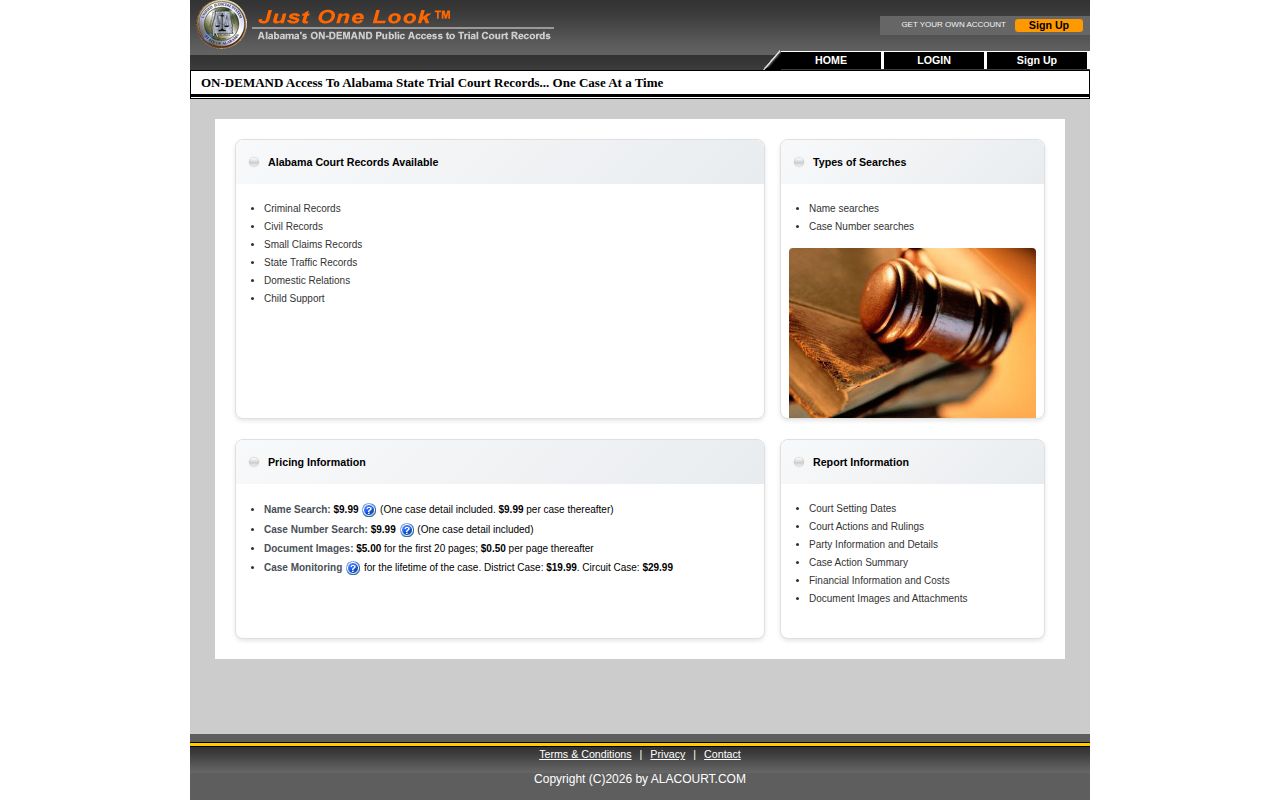
Use a case number or other matching details when possible; similar names can point to different cases.
State prison is a different layer. After sentencing, the ADOC Inmate Search is the custody locator. It is not a county arrest archive. Reading it as one invites mistakes. Highway Patrol arrests work differently again. ALEA's newsroom may report a selected enforcement event, while the receiving county or municipal jail keeps the booking record. A blank in one layer settles nothing about another.
Fresh bookings take time to appear. Arrest, transport, data entry, and the public update are separate steps. A release can drop someone off a current-custody list while the booking record stays with the jail. Entries can also be restricted or unpublished. For an urgent custody question, call the jail instead of treating a search page as a live feed.
Alabama Expungement and Mugshot Copies
Expungement in Alabama is a court matter. ALEA does not grant it. The agency tells petitioners to get a certified criminal-history record. They then file a petition with the court. From there, the statute and the court forms govern everything. They set the waiting period, the filing steps, any objections, and the cost. The court order is what matters. A dismissed case, a release, or an old web entry does not automatically qualify. Read the statute before assuming anything.
Once a judge signs the order, custodians across the criminal-justice system follow its terms. A qualifying state or local arrest record may be restricted or pulled from public view. A booking photo copied onto a private site is a different record entirely. Some publishers take free correction or removal requests. Send the record URL and court paperwork. Others will update a disposition instead of deleting the page. Policies shift over time, and none of this is Alabama law.
Each publisher runs its own process. The Busted Newspaper listing form wants the URL, a reason, and legal documents. It reports a review period. RecentlyBooked says its request process has no fee. It accepts corrections for a wrong person, a duplicate, or a juvenile record. A qualifying court result also counts. Mugshots.com describes a no-charge record-maintenance process. It can require legible court paperwork. A county subdomain on Mugshots.zone shows its own request path. One county page does not prove a statewide policy. Arrests.org's Alabama pages include a record-removal area, but no stable statewide free policy is listed.
These interfaces show publisher processes, not legal rights. Send each request to the publisher hosting the copy. Check the official source first. The Busted Newspaper free listing form is one documented correction route.
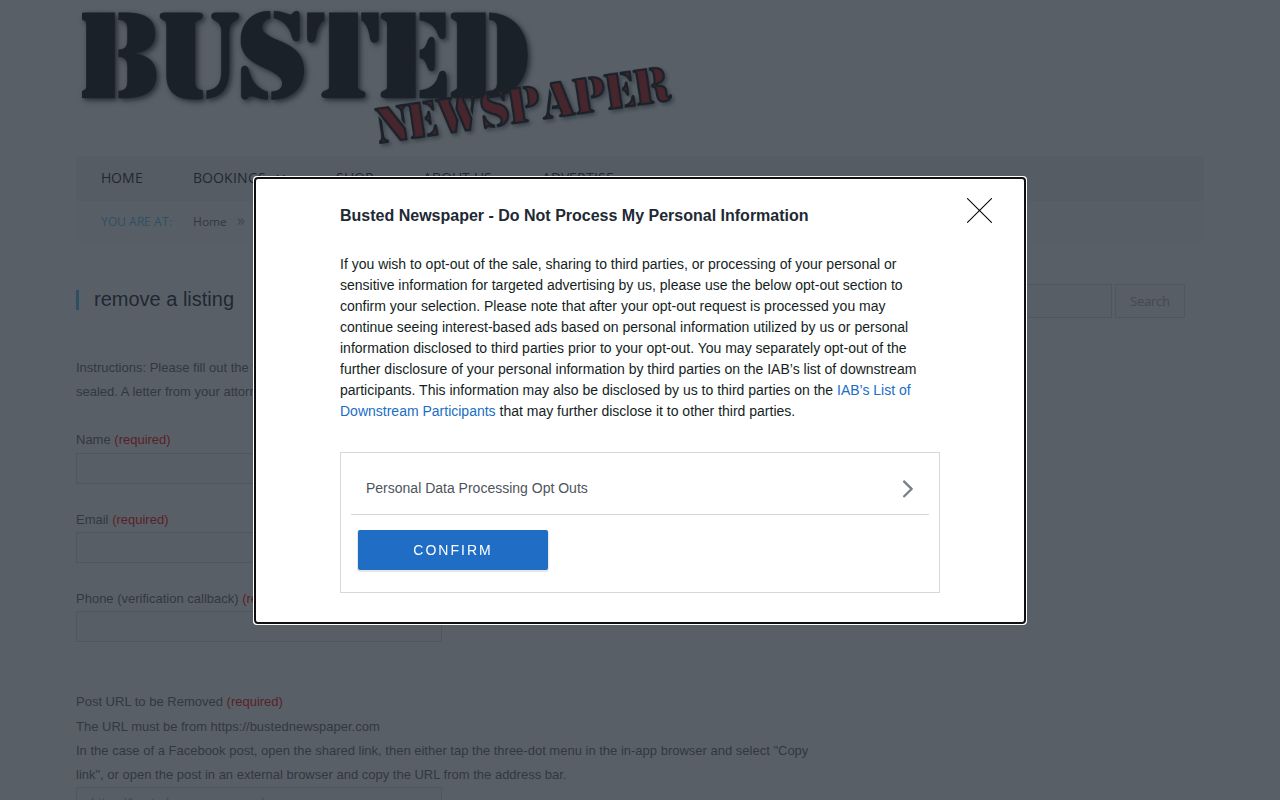
The form asks for the entry and a reason. It cannot change an Alabama court or sheriff record.
Be wary of paid erase-all promises. Confirm the court and agency record first, then use a publisher's stated free correction route where one exists.
Alabama Historical Record Retention
No single retention rule covers every Alabama record type. Booking photos, jail rosters, arrest logs, dispatch recordings, and court files each answer to their own rules. Ask the custodian to identify the record series. Then ask which approved Records Disposition Authority applies to that series. Then find out where the copy sits. It may remain with the sheriff or court. It may have moved to an archive or been destroyed under the schedule. It may also have simply dropped from the public website.
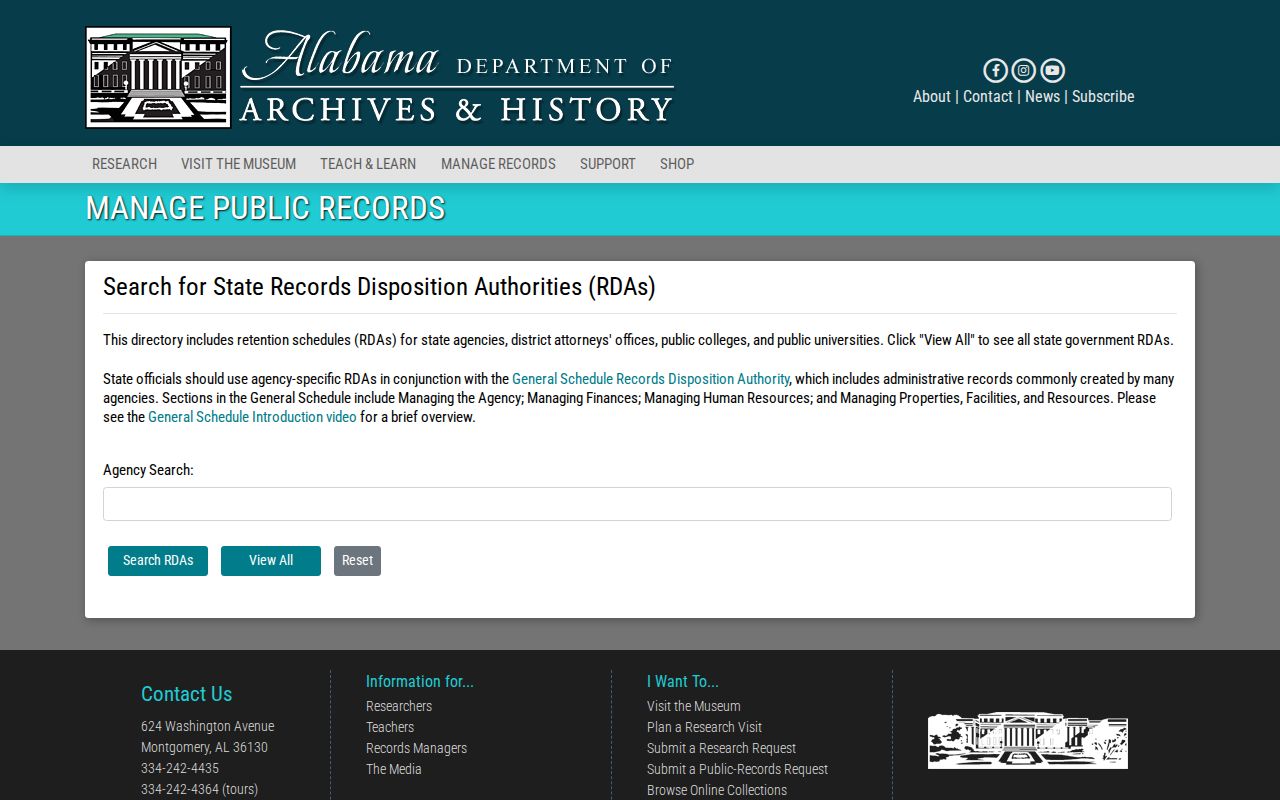
The Alabama Department of Archives and History RDA search is the starting point. It covers state and local disposition schedules. Its research service handles historical requests, not current booking lookups. The RDA search interface displays the schedules; it is not a current inmate database.
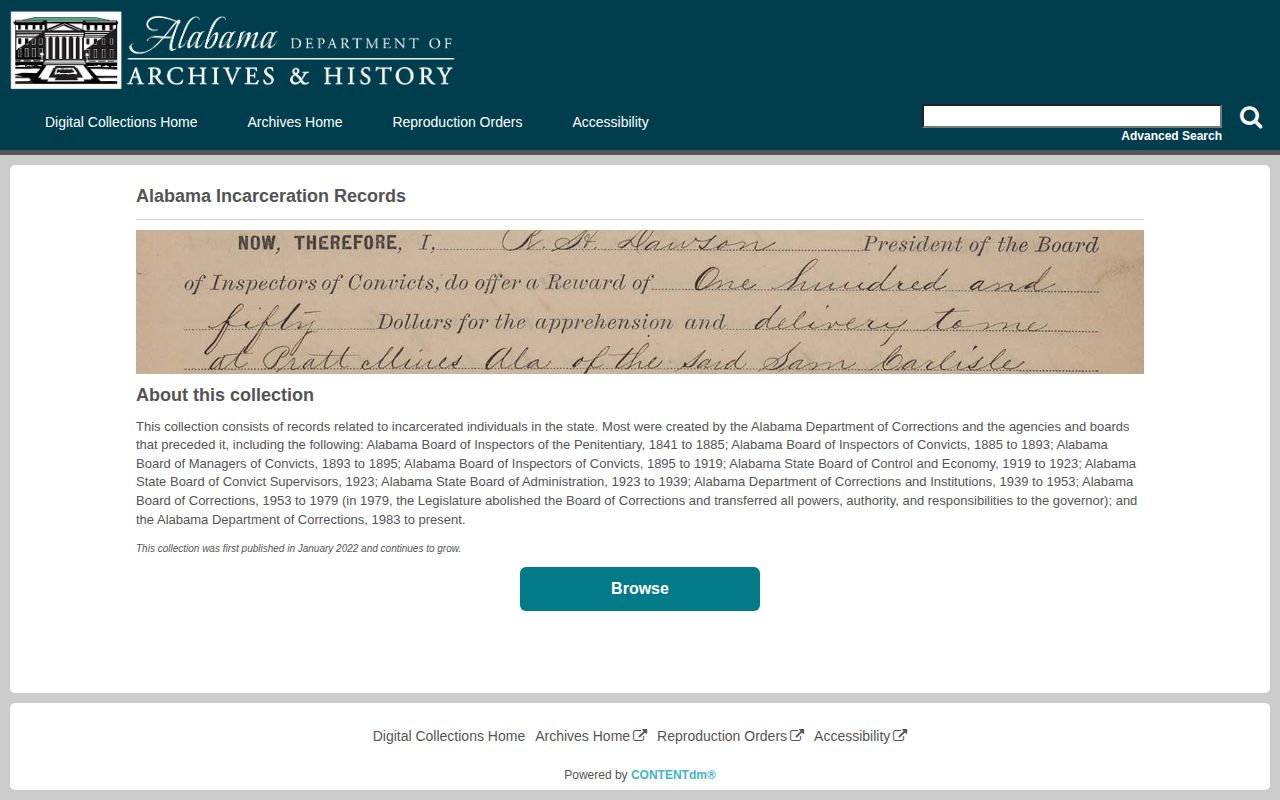
For older incarceration history, the ADAH digital collection holds historical correction records. The historical collection view is not a current county booking-photo source.
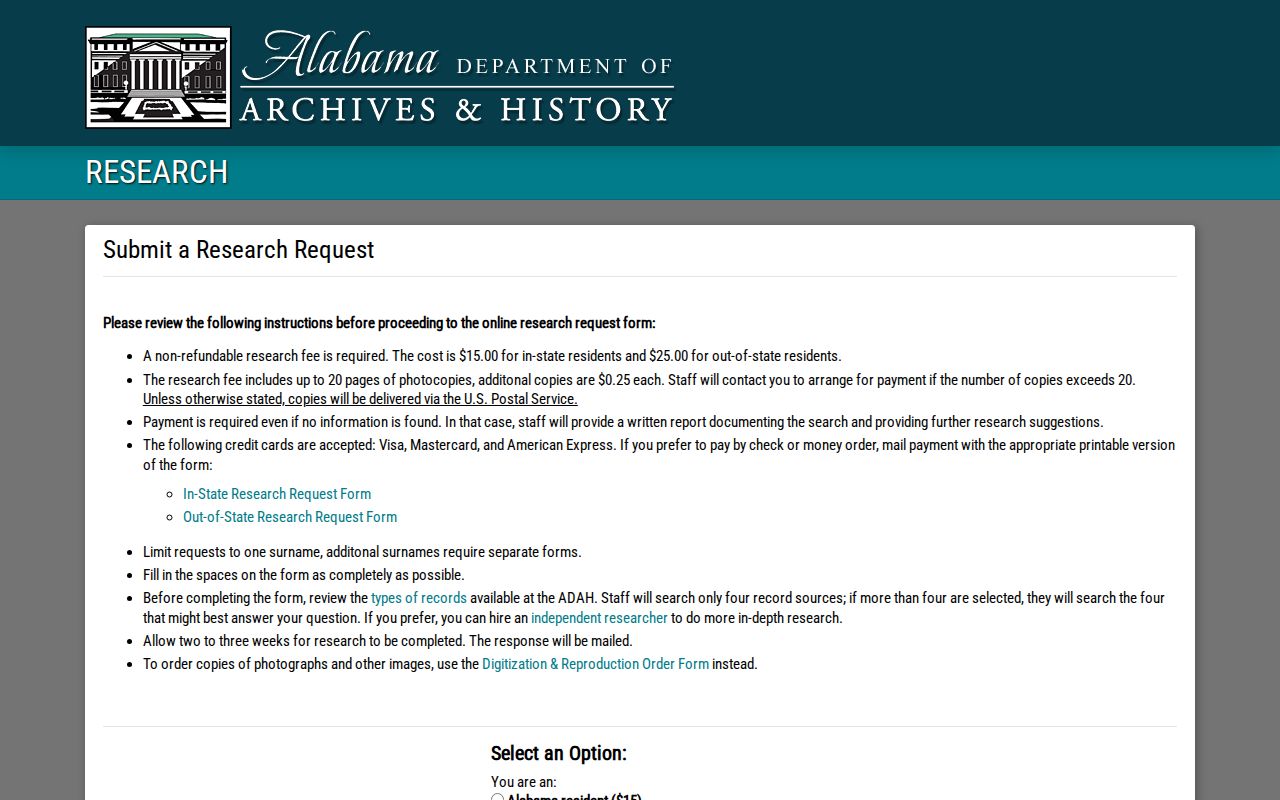
A roster entry may age off a website. The original office can still hold it under a different schedule. A court file can be permanent even when a jail vendor's public display expires fast. That mismatch trips up many record seekers. The Archives research request page lists current fees and copy limits. That covers a surname or collection search. Treat its stated turnaround as an estimate for archival digging. It won't say who is in custody today. For a recent arrest, always start with the original custodian. Name the date range and record type before asking an archive to search. ADAH's research request page explains that route. It helps when a record has historical value. It also helps when an agency says the file was transferred.
Note: If an office cannot find an item, request a written response stating whether it was never created, transferred, destroyed under an approved schedule, or withheld.